
World Cup Qualifiers: What Really Decides the Race, and Why Every Small Detail Matters
eliminatórias da copa do mundo are shaped by more than reputation or possession; they are decided by points, tie-breakers, fixture timing, and the ability to convert narrow margins into qualification. In a process governed by confederation rules and FIFA regulations, the table often changes faster than the performances suggest, and a single result can alter the balance of an entire group.
What Shapes the World Cup Race
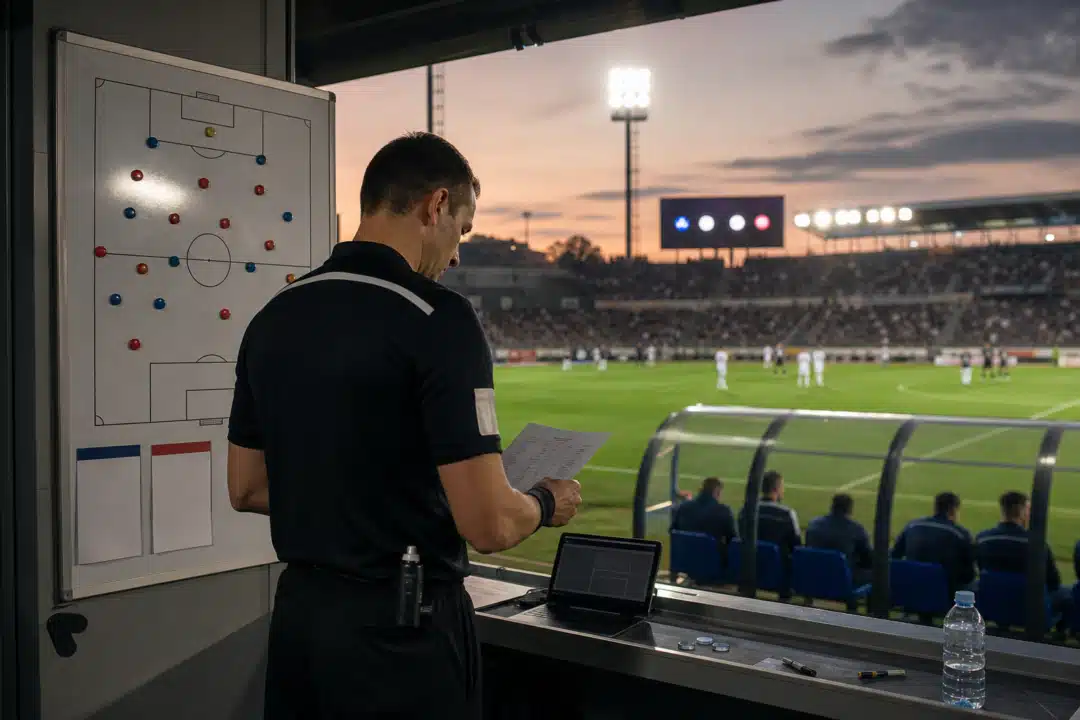
The race is built on a simple structure: teams collect points, then the ranking system resolves ties through objective criteria. In most confederations, a win is worth three points, a draw one, and a loss none, while the table is then ordered by tie-breakers such as goal difference, goals scored, head-to-head records, and disciplinary records depending on the competition format. FIFA and confederation qualification formats are publicly documented through official competition rules and match databases, which means that every stage is determined by measurable outcomes rather than subjective evaluation.
That structure makes consistency more valuable than isolated brilliance. Teams that manage away points, protect leads, and avoid unnecessary cards usually place themselves in a stronger position because qualification campaigns reward accumulation over spectacle. In practical terms, the margin between advancing and missing out is often one or two matches across a long schedule.
Why points matter more than style
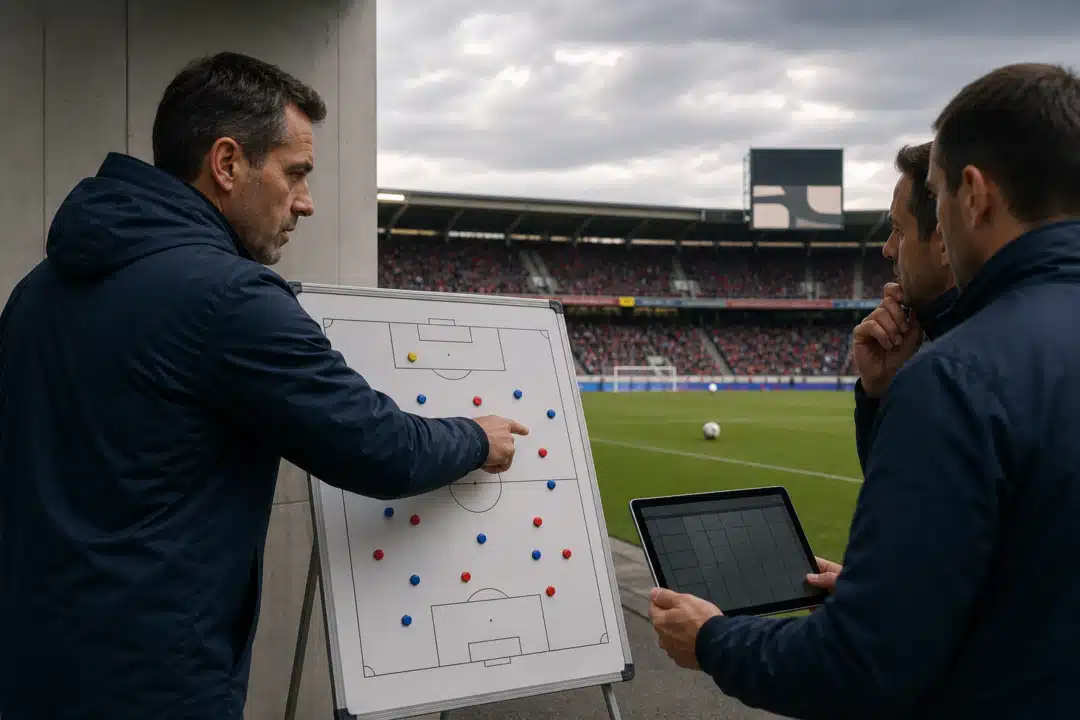
Style can influence confidence, but points decide the table. A team may control possession, create more chances, and still leave with nothing if it fails to finish chances or defend transitions. In qualification, that reality is severe because the schedule leaves limited room for recovery, especially in compact groups where direct rivals face one another twice or only a few times. The result is that pragmatic game management often carries more value than aesthetic dominance.
This is also why coaches prioritize game state over image. Protecting a one-goal lead, slowing the tempo after scoring, and managing substitutions with the standings in mind are standard competitive decisions. The objective is not to impress; it is to maximize the expected return from each fixture, particularly when the final rounds of eliminatórias da copa do mundo compress pressure into a short period.
How goal difference changes standings
Goal difference becomes decisive when teams finish level on points, and in many competitions it is the first major separator. That makes every extra goal relevant, not only for attack-minded sides but also for teams that need to avoid heavy defeats. A 1-0 win and a 4-0 win both produce three points, yet the second result can reshape the table if qualification is decided on secondary criteria. Official standings systems in international football routinely use goal difference and goals scored as tie-breakers, which is why late goals often matter as much as the match result itself.
Defensive discipline also matters here. Conceding in stoppage time can change a positive goal difference into a neutral or negative one, which is especially costly in groups where several teams cluster tightly. In that environment, clubs and national teams often adjust their approach late in matches, choosing lower-risk passing and deeper defensive blocks to preserve the numerical advantage already earned.
- Protecting goal difference can be as important as chasing another goal.
- Late concessions often have disproportionate impact on final rankings.
- High-scoring wins can separate teams that finish level on points.
Which fixtures can swing the table
Not all matches carry the same weight. Direct clashes between teams near the top of the group can create immediate separation, while games against lower-ranked opponents often determine whether a contender keeps pace with the leaders. Home fixtures also matter because travel, climate, altitude, and crowd pressure can affect performance, especially in South American and African qualification calendars where conditions vary widely from venue to venue.
Another critical factor is scheduling density. When two rivals play within a short window, the first result can alter tactical risk in the second. A team that drops points early may need to attack more aggressively later, which increases exposure to counterattacks. These are the fixtures that most often swing the table because they change both the arithmetic and the psychology of the campaign.
Where eliminatórias da copa do mundo turn
The decisive turn usually arrives when the standings stop reflecting games in hand and start reflecting immediate pressure. At that stage, qualification campaigns become less about long-term projection and more about execution under constraint. Teams with stable defensive structures and reliable set-piece routines tend to gain an edge because tight matches are frequently decided by one transition, one dead-ball sequence, or one error under pressure.
In recent cycles, FIFA has also maintained a broad and transparent qualification framework across confederations, with each region using its own format under official regulation. That framework is published through competition pages and regulatory documents, and it reinforces the same principle everywhere: the race turns when teams stop being judged by potential and start being judged by the table.
What teams must do next
Teams that want to stay alive in qualification need a disciplined sequence of actions. They must convert home matches into points, reduce avoidable defensive errors, and monitor tie-breakers as closely as the standings themselves. The most efficient path is usually built on controlled risk, because qualification rarely rewards reckless attacking if it weakens the back line or invites unnecessary suspensions.
- Win the matches against direct rivals whenever possible.
- Preserve goal difference by limiting late concessions.
- Use set pieces and transitional moments efficiently.
- Manage squad rotation to keep key players available.
That approach is especially important in the final stretch, when the table compresses and every result changes the qualification equation. In that phase, the most successful teams are usually not the most dramatic, but the most consistent, the most organized, and the most accurate under pressure.
